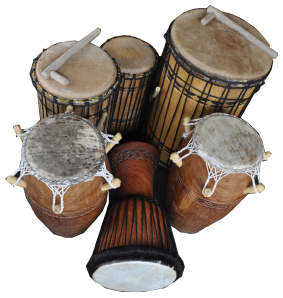
Blog
Follow us on Facebook, Twitter for videos, discussion and events coming up. : )
Last Updated: 22 Feb 2017
jabbajabbajembe.com
www.facebook.com/pages/Jabbajabbajembecom/178832888841459
Drum Shop Opening in March 2017
Last Updated: 22 Feb 2017
Hey Folks we are delighted to announce the opening of our online Djembe shop in march
We will stock a range of drum sizes to suit all age and budget.
All our Drums are hand crafted in west Africa and have solid wood body with natural goat hides.
As the year goes on we will be bringing more of our favourite workshop instruments to the shop.
For prices and pre orders call dave on 0872404442 or fill out a contact form on our home page.
(1).jpg)
Promoting Work Place WellBeing in your company
Last Updated: 07 Apr 2016
Promoting workplace wellbeing should be a top priority for any business.
Did you know that the European Network for Workplace Health Promotion has defined workplace health promotion as the combined efforts of employers, employees and society to improve the health and well-being of people at work?
Did you know that many countries now engage in more and more teambuilding activities to benefit the health and wellbeing of their staff.
A happy and content workforce will provide maximum effort and productivity for their employers, customers and other employees.
Team building has become more common in the workplace with companies spending more and more time and resources in protecting and maintaining the mental health and wellbeing of their employees.
Group Drumming and Creative Play has become extremely popular in many environments such as HealthCare facilities, Schools and Educational groups, Community Groups and Now Corporate Teams.
Group Drumming is Unique in the way it can unite people of all ages regardless of musical ability or experience.
With some facilitation a group can Relax have Fun and play together in a Friendly non competitive environment almost instantly.
Some of the many Benefits Group Drumming and Team Building can have on your Workforce.
- Enhanced self-esteem
- Reduced stress
- Improve staff morale
- Increase job satisfaction and productivity
- Improve sense of well-being
- Creates a sense of connectedness.
Here’s why drumming is good for you:
- Makes you Happy and Energized.
- Drumming releases endorphins and Alpha waves in the brain, which are associated with general feelings of well-being and euphoria.
- Induces deep relaxation.
- In one study, blood samples from participants who participated in an hour-long drumming session revealed a reversal in stress hormones.
- Drumming Helps control chronic pain.
- Drumming promotes the production of endorphins and endogenous opiates, which are the body’s own morphine-like painkillers.
- Drumming provides a cardio workout and Physical Stimulation.
- Drumming takes you into the present moment.
- Allows for personal transformation.
- Drumming stimulates creative expression.
- When you drum in a group, you not only get to self-express, but you get feedback from the other drummers.
- It’s the equivalent of talk therapy! Drum circles provide a means of exploring your inner self.
- Most Importantly DRUMMING IS FUN..
- Studies show that drumming circles boost the immune system.
- Releases negative feelings. The act of drumming can serve as a form of self-expression. You can literally drum out your feelings. When held, negative emotions can form energy blockages.
At Jabba Jabba Jembe we provide a range of workshop events to suit your needs, we can tailor programs to suit office parties, Team Building sessions, Ice Breaker sessions for Conference and meetings there are many possibilities.
Our Clients include Google, Facebook, Microsoft, HSE
Microsoft Ireland
A big thank you to Dave at Jabba Jabba Jembe for the fantastic African Drum Workshop we had onsite last week.
The team really enjoyed learning to play the rhythms and building on it to create a unique sound.I was delighted to see everyone relaxing after a long week of meetings, it was the perfect wind down and a great way to have some fun
Everyone enjoyed the ‘free styling’ and really got into the spirit of the event by trying out all the different instruments.
It was a fun and relaxed team building exercise – something different to try, I highly recommend it!
Joyce Lynch
We can provide workshops on site at your premises or in a venue of your choice.
Kind Regards
David Day
059 8638252
087 2404442
dave@jabbajabbajembe.com
.jpg)
.jpg)
Great weekend of events at the edinburgh fringe festival with our AKROWA show
Last Updated: 16 Aug 2012
Akrowa show had its first events at the Edinburgh Fringe festival this month..
The Akrowa show is an interactive performance of percussion song and dance. During the show the audience get a chance to hear some of the various hand drums and bass drums from west africa, see some traditional dance and hear some of the many songs and chants from the region.. The show is tailored to suit many different environments and also gives the audience an opportunity to take part and play instruments, sing and dance together with the group.
We provide this show for schools, community groups, festivals, corporate
events, including staff parties, team-building events and conferences..
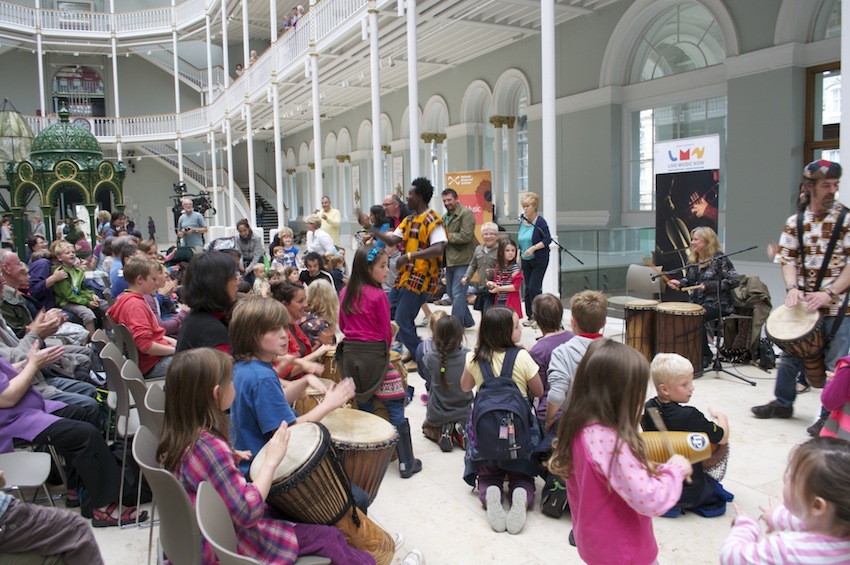
During our time in Edinburgh we provided Two concerts at the national museum and 4 private events at childrens centers and care facilities for adults. All went better than expected and we look forward to a return trip with lots of new venues next year..
These events were arranged by live music now.
livemusicnow.org.uk/lmn_scotland
Here's a nice review of our show at the national museum !
Broadway Baby 4 stars.
Free Fringe Music
Rhythmic Gymnastics
Venue Number 179. National Museum of Scotland, Chambers Street,Edinburgh, EH1 1JF. 4-26 August 12:45 (45 minutes). Suitability: U.
Thomas Annand and David Day have come all the way from Ireland to prove that there’s far more to African drumming than monotonous banging. The pair specialise in traditional West African drumming and perform as part of ‘Sounds Global’ at the Scottish Museum, itself a small but fascinating exhibition. Free Fringe Music is on every day and is a fantastic excuse to visit the museum.
The pair’s music echoed around the cavernous gallery: the main instruments were the Kpanlogo and djembe African drums on which they generate a surprising variety of sounds, pitches and dynamics, their dexterous technique being clear to see. Other percussion instruments (both drums and handheld) were also played. What was most impressive was their use of the asalato: conker-like instruments that were shaken and rattled with masterful skill. Their multi-tasking was impressive, their drumming not only drumming evolving and complex polyrhythms but simultaneously chanting and, later, even doing some dancing. This being a museum, there was some welcome educational content in explaining the different instruments but all the while, the pair’s enjoyment spread across the grinning audience.
Audience participation played a large part in the show. Children and adults were invited to join in as a plethora of intriguing instruments were passed around. Any anxiety soon changed to enjoyment. There was call and response, freestyling and some singing; a few brave souls even got up to dance. The lack of rhythm from some participants put the professionals’ talents into sharp relief, but as Annang claimed, ‘we are all Africans today’, leaving us with ringing ears and smiling faces after forty five brief minutes.
[Ed Nightingale]
.jpg)
National Museum
.jpg)
Great Audience participation with lots of drumming and dancing finishing of the show with great energy..
We were not the only ones sad to leave :-/
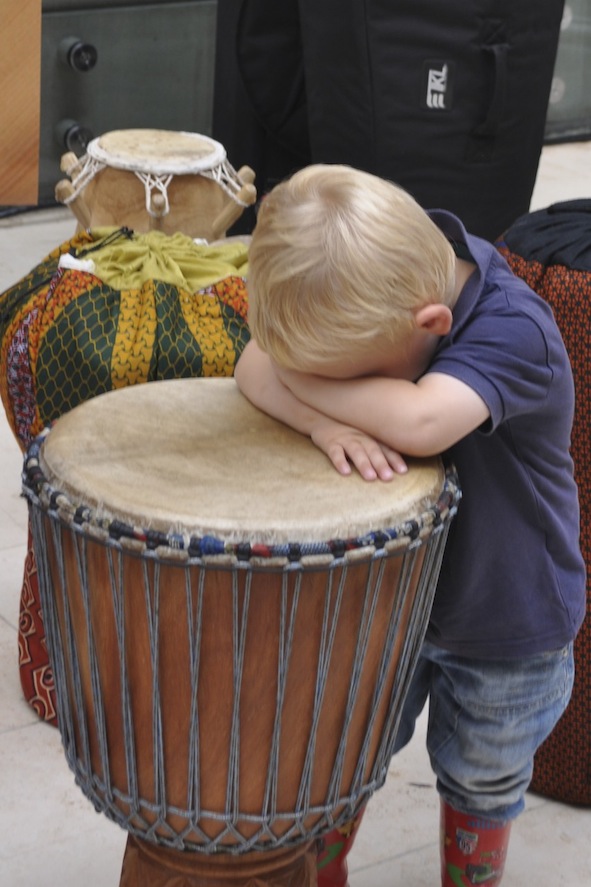
health rhythms
Last Updated: 18 Jan 2012
Drumming has for a long time been known to have profound effects on those listening and playing rhythms.
There has been many different studies regarding the benefits of rhythm and music with peoples health, here is an interesting link with some information from one of those studies carried out by rem drum company.
Drumming and the benefits for Health & Wellbeing : )
Akrowa show
Last Updated: 08 Nov 2011
Akrowa show..
Here's an exciting new project with my good friend Thomas Annang from Ghana..
Akrowa is an interactive show giving audiences an insight into percussion, song & dance from West Africa.
.jpg)
Check out our short promo video for a taste of what we do..
We are available to give Performances, Drum and Dance workshops, fun interactive shows for festivals, cultural events, schools, youth and community groups, corporate events- Team Building sessions throughout Ireland.
Prices are available on request and subject to group sizes..
Feel free to call or email for further information.
087 2404442
Dave
jabba jabba jembe
Here's a fantastic video documenting Rhythm and Life in West Africa..
Last Updated: 10 Nov 2010
This is the best video i have seen on youtube.
Please share the link..
Here are some links to recommended websites.
Last Updated: 22 Sep 2010
Here are some links to some useful websites for gathering new information on Jembe and some of my favorite artists.
www.famoudoukonate.com
Maître du Djembe - Master of the Djembe
Famoudou Konaté is a world-renowned virtuoso of the djembe drum and its orchestra. One of only a handful of initiated Masters of the Malinké drumming tradition, Famoudou is universally respected as one of the world’s premiere djembe Drum Masters. He has dedicated his life to performing and preserving the music of his people, helping to elevate the djembe orchestra from its traditional roots to worldwide popularity.
Famoudou was born in 1940 near Sangbaralla, a village in the Hamana region of Upper Guinea, the Malinké heartland and the birthplace of the Dunun family of rhythms. A percussive prodigy, he was drumming in community festivals at the age of eight and was soon in demand as a djembefola across the region. From 1959 to 1985, Famoudou was the Lead Djembe Soloist for Les Ballets Africains de la République de Guinée, touring the world and performing with astounding virtuosity. During this time, Famoudou himself created many of the musical arrangements now common in West African performance groups worldwide.
Since 1986, he has taught and performed annually throughout Europe, Japan, Israel, North America and West Africa, instilling a generation of non-African drummers with an extraordinary level of training. In 1996 he received an honorary professorship in Didactics of African Musical Practice from University of the Arts Berlin. He has produced 7 CDs, including his latest Hamana Namun.
www.mamadykeita.com
|
Mamady Keïta was born in 1950 in Balandugu (Guinea), a village of the Wassolon region, near the Fé River. His father was a master hunter and a fida tigi (master of the plants, that is to say a healer). His mother, wishing to know the destiny of the child that she was carrying, consulted a soothsayer who announced that it would be her last son: “The child must be left to amuse himself because it is there that he will make is name.” From when he was old enough to crawl, Mamady descended on all the pots and pans in order to turn them over and beat on them. “My son will therefore be a djembefola;” his mother said to herself and she had an instrument constructed to his size. Very quickly he surprised everyone by his natural gifts. No one could believe their ears and they would ask themselves how a small boy could draw such a sound from a drum. Mamady “Nankama” (Mamady-who-was-born-for-that), and “Balandugudjina” (the devil of Balandugu) are his two nicknames. He owed his initiation into the history of the Mandeng and its music to Karinkadjan Kondé, an old djembefola (djembe player) of his village; in Malinke they say “Words come forth from an old mouth to enter a new ear.” Curious about everything, he would not rest until he knew, firstly all the rhythms of the Wassolon, then of the Mandeng and those of the neighboring ethnic groups. The new president of Guinea, Sekou Touré, wished to spotlight Guinean Culture through music and dance and therefore devised a system of local, regional and national competitions that would attract the best artists of the land into the National Ballets of Guinea. Out of over 500 competitors, Mamady Keïta, at the age of fourteen, was selected as one of 5 percussionists, only three of which were djembe players. There were forty-five artists that comprised the National Ballet Djoliba and Mamady was the youngest member. For over twenty years, Mamady travelled around the world with Djoliba, only resting between tours for short periods in his native country. He was named lead djembe soloist only one year after Djoliba was formed, he was just 15 years old. At seventeen, the young drummer was cast in a Harry Belafonte film titled Africa Dance. After 15 years in the Ballet Djoliba, when he was 29, Mamady became the artistic director and fulfilled this function until 1986 when he left the ballet for good; this was the first time that a drummer was given the position of artistic director. |
This is a great website for connecting with other people interested in Jembe and west African Drumming, its got good forums and interviews and lots and lots of information..
www.djembefola.com
www.bigbangfestival.com
Sixteen years ago, the first Big Bang Festival was organised in Dublin by CityArts and Wet Paint Arts, changing the landscape of drumming in Ireland forever. Big Bang, now an independent festival, continues to celebrate a broad spectrum of styles of drumming, but also rhythm as it affects other art forms such as dance, voice and visual art.
The Big Bang has presented a diverse range of international performers: Trilok Gurtu (India), Mamady Keita (Guinea),Johnny Kalsi (UK), Sergio Krakowski (Brazil), HeartBeat Percussion (Singapore), Monobloco (Brazil), Seckou Keita(Senegal), Andrea Piccioni (Italy) and Abdullah Chhadeh (Syria).
www.pixelcode.ie